
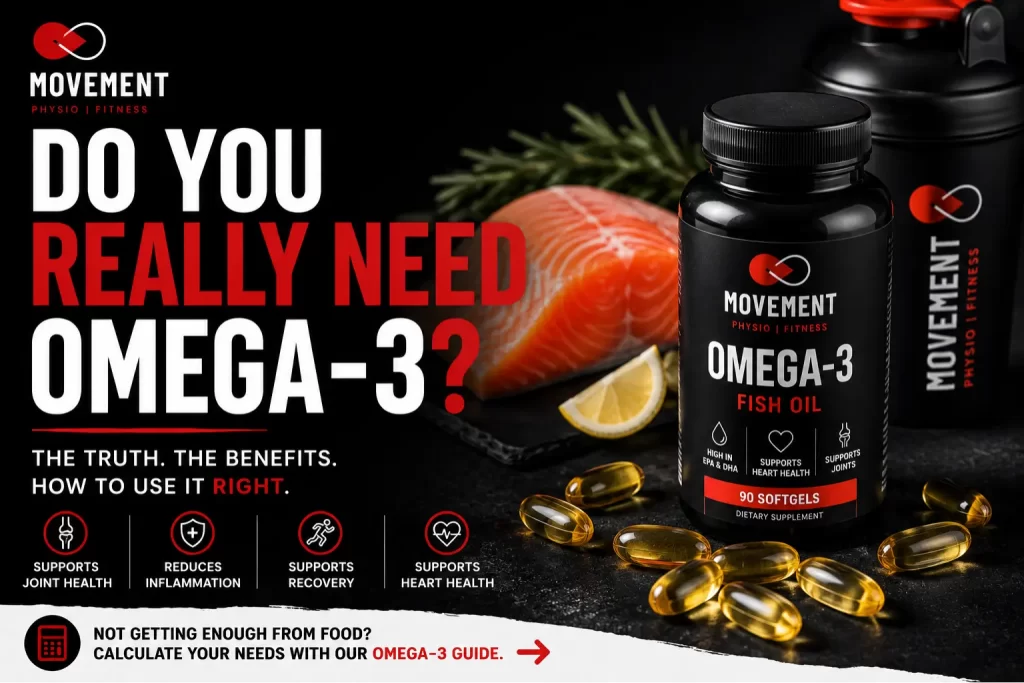
Do You Really Need Omega-3?
Omega-3 is often recommended for “general health.”
But that’s vague—and
not very helpful.
Like most supplements, Omega-3 only makes sense if there’s a gap.
For some people, it’s unnecessary.
For others, it can support recovery, joint health, and long-term well-being.
When You DON’T Need Omega-3
You likely don’t need it if:
- You eat fatty fish (salmon, mackerel, sardines) 2–3 times per week
- Your diet is balanced and minimally processed
- You don’t deal with joint stiffness or inflammation
In this case, you’re already covering your needs through food.
When It Actually Helps
Omega-3 can be useful if:
- You rarely eat fish
- Your diet is high in processed foods
- You experience joint stiffness or soreness
- You train regularly and want to support recovery
This is where Omega-3 becomes relevant—not as a fix, but as support.
What It Actually Does
Omega-3 plays a role in:
- Reducing inflammation
- Supporting joint health
- Aiding recovery from training
- General cardiovascular health
It won’t transform your performance overnight—but it can help remove friction.
Common Mistakes
- Taking low-quality fish oil
- Not checking dosage (too low to matter)
- Expecting immediate results
- Using it instead of fixing diet
Like everything else—foundation first.
How to Use It
- Aim for 1–2g of combined EPA + DHA per day
- Take with meals
- Choose high-quality, tested products
Quick Reality Check
If fish isn’t part of your regular diet,
you’re probably not getting enough Omega-3.
The Bottom Line
Omega-3 is simple:
If you eat fish regularly → you likely don’t need it
If you don’t → it can be a useful addition
Not Sure Where You Stand?
Most people assume their diet is “good enough.”
It often isn’t.
Book an assessment and we’ll look at your nutrition properly—so you only use supplements when they actually make sense.